Tech Interview
Dec 8, 2025
Master behavioral interviews with proven frameworks, 10 sample answers, and expert strategies. Learn the STAR method and build your story bank to land your dream job.
Introduction
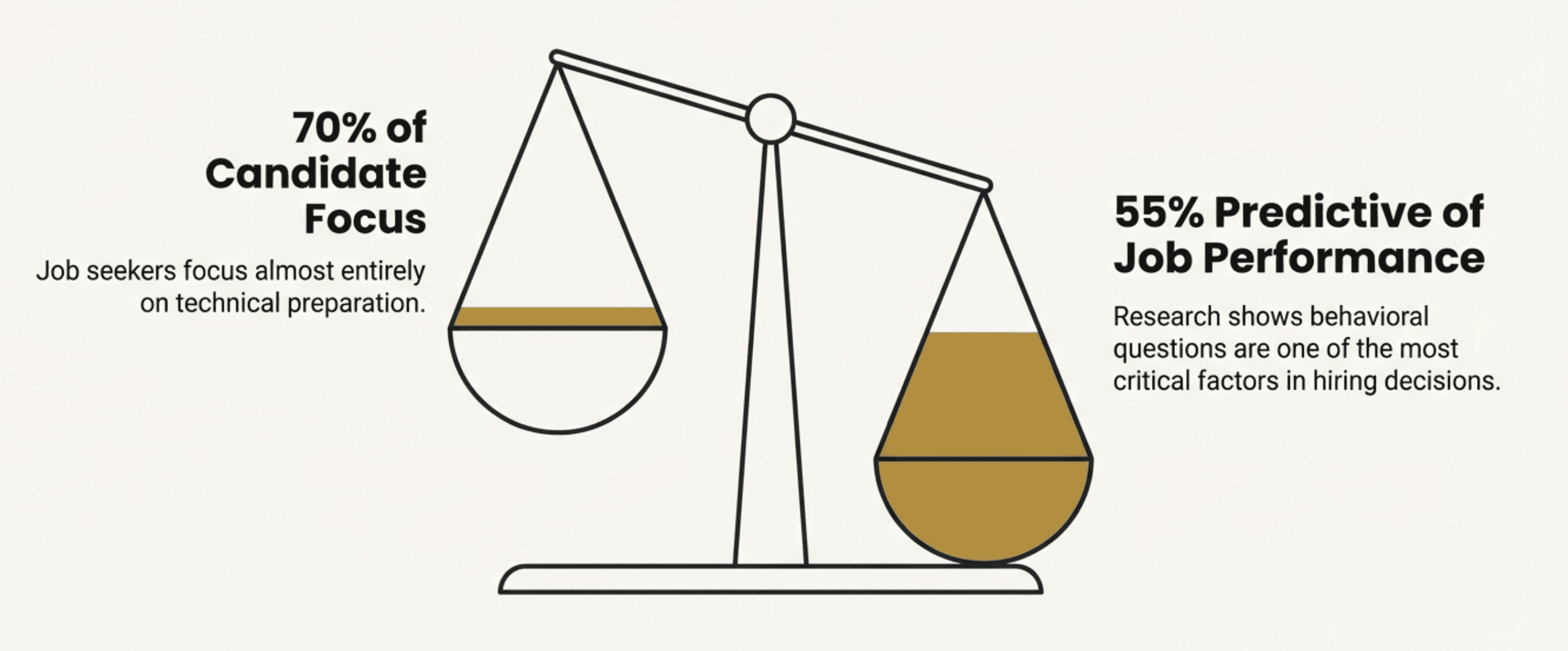
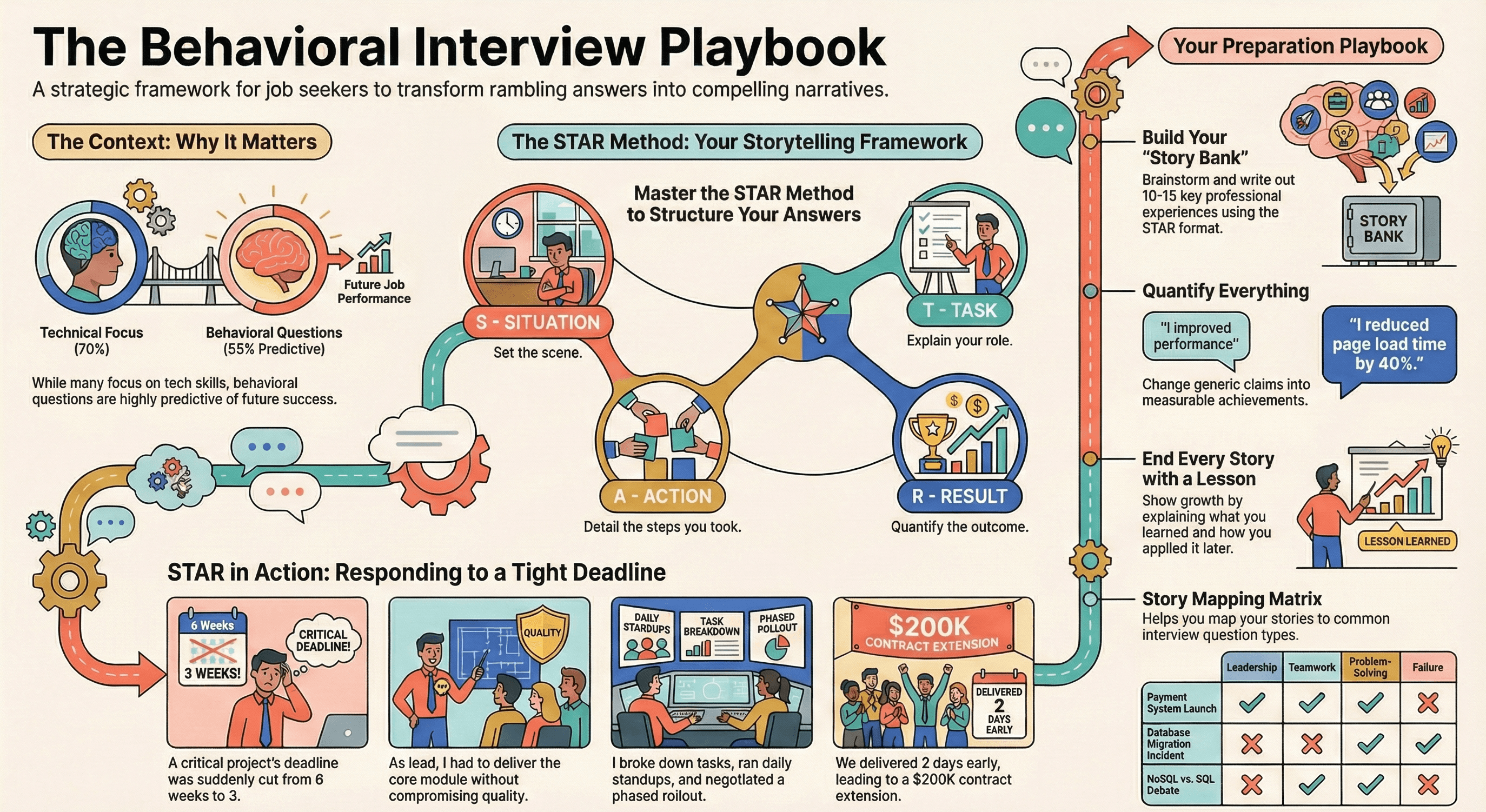
Here's the uncomfortable truth, 70% of job seekers focus almost entirely on technical preparation while treating behavioral interviews as "just talking about yourself." Yet research shows that behavioral questions are 55% predictive of future job performance, making them one of the most critical factors in hiring decisions.
The problem? Most candidates ramble, undersell their achievements, or share examples that miss the mark entirely. But here's the good news: behavioral interviews are completely learnable. With the right frameworks, preparation strategies, and practice, you can turn these conversations into your competitive advantage. This guide will show you exactly how.
Why Behavioural Interviews Matter More Than You Think
Behavioural interviews aren't just box-checking exercises, they're how employers assess whether you'll actually succeed in the role.
Technical skills get you in the door. But behavioural competencies determine:
How you handle pressure and ambiguity
Whether you can collaborate across teams
Your ability to learn from failures
How you drive results and take ownership
Whether you'll fit the company culture
Companies like Amazon have built their entire hiring philosophy around behavioral principles. Their 14 Leadership Principles aren't just corporate buzzwords, they're evaluation criteria used in every single interview
The STAR Method: Your Foundation for Every Answer
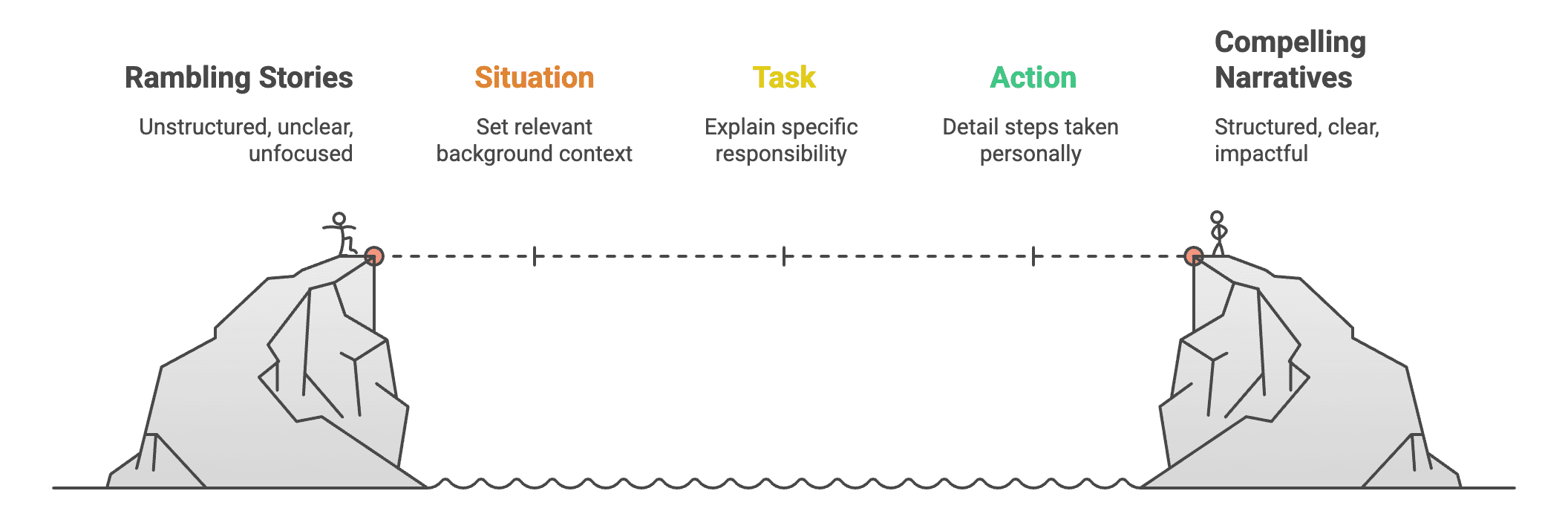
The STAR framework is the gold standard for structuring behavioral responses. It transforms rambling stories into compelling narratives that demonstrate your capabilities.
STAR stands for:
Situation: Set the context with relevant background
Task: Explain your specific responsibility or challenge
Action: Detail the steps YOU took (focus on "I," not "we")
Result: Quantify the outcome and lessons learned
Example Question: "Tell me about a time you had to meet a tight deadline."
Strong STAR Response:
Situation: "While working as a software developer at a fintech startup, our team needed to deliver a critical payment processing feature for a major client. The original timeline was 6 weeks, but due to regulatory changes, we suddenly had only 3 weeks."
Task: "As the backend lead, I was responsible for ensuring our core payment module was completed, tested, and deployed without compromising security or reliability."
Action: "I immediately broke down the project into daily milestones and identified which features were critical versus nice-to-have. I implemented daily 15-minute standups to catch blockers early and coordinated closely with our QA team to run parallel testing. I also negotiated with the product team to phase the rollout—launching core functionality first, then adding enhanced features in sprint two."
Result: "We delivered the critical features 2 days ahead of the revised deadline. The phased approach reduced risk and actually improved the final product quality. The client praised our responsiveness, which led to a contract extension worth $200K. I learned that strategic scope management and clear communication can turn impossible deadlines into opportunities."
Why this works:
Provides concrete context without unnecessary details
Uses "I" to clearly show personal contribution
Includes specific strategies and decision-making
Quantifies business impact ($200K contract)
Demonstrates learning and growth mindset
Alternative Framework: The CAR Method
Some coaches prefer CAR (Context, Action, Result) as a slightly more streamlined approach:
Context: Briefly set the scene
Action: Detail your specific contributions
Result: Share measurable outcomes
CAR works well for shorter responses or when you need to move quickly through multiple examples. The key is consistency, pick one framework and stick with it across all your answers.
The Power of Your Story Bank
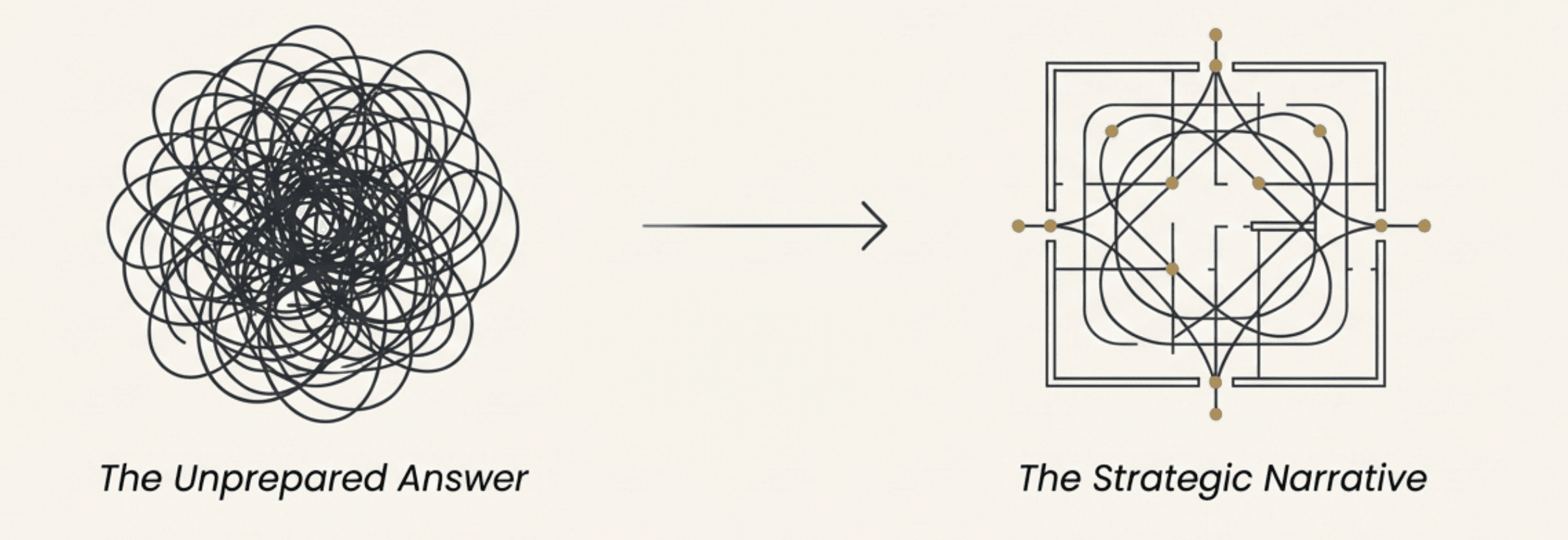
Here's what separates good candidates from great ones: preparation depth.
How to Build Your Story Bank
Step 1: Brainstorm 10-15 professional experiences across these categories:
Major projects you led or contributed to
Problems you solved
Failures and lessons learned
Times you influenced others
Situations requiring fast learning
Conflicts you navigated
Accomplishments you're proud of
Times you demonstrated leadership
Experiences working under pressure
Step 2: Write out each story using STAR format
Be specific. Include:
Numbers and metrics
Timeframes
Specific tools or methodologies
Stakeholders involved
Obstacles overcome
Step 3: Create a Preparation Grid
Map your stories to common question themes:
Story | Ladership | Teamwork | Problem Solving | Failure | Conflict |
|---|---|---|---|---|---|
Payment System Launch | Yes | Yes | Yes | No | No |
Database Migration Incident | No | No | Yes | Yes | No |
NoSQL vs SQL Debate | No | Yes | Yes | No | Yes |
This grid helps you quickly identify which story to deploy for any given question.
Tips and Tricks
1. Quantify Everything Possible
Numbers make abstract accomplishments concrete.
Weak: "I improved system performance."
Strong: "I reduced page load times by 40%, which increased user engagement by 15% and lowered bounce rates from 35% to 22%."
Track metrics even in non-technical roles:
Time saved
Cost reduced
Team size
Project scope
Customer satisfaction scores
Revenue impact
2. Show Continuous Growth
End stories with learning takeaways that demonstrate evolution.
Template: "This experience taught me [specific lesson], which I applied when [subsequent situation], resulting in [improved outcome]."
This shows you don't just experience things, you systematically learn and improve.
3. Prepare "Connector Questions"
When an interviewer asks about one competency, prepare questions that bridge to others.
Example: After answering about teamwork, ask: "That project also required navigating some ambiguity in requirements. Would you like to hear how we approached that?"
This gives you control over showcasing your diverse capabilities.
4. The "Headlines First" Technique
Start answers with a one-sentence summary, then elaborate.
Example: "Yes, I've definitely had to give difficult feedback specifically when a team member's code quality was creating technical debt. Let me walk you through that situation..."
This focuses your answer and shows strong communication skills.
Handling Curveball Questions
Not every question fits a neat category.
Tell me something not on your resume
Purpose: Assesses authenticity and personality fit.
Strong approach: Share a meaningful hobby, volunteer work, or unique perspective related to your field.
Example: "I run a small YouTube channel where I explain complex algorithms to beginners. Teaching concepts to non-technical audiences has significantly improved my communication skills at work, I now regularly present technical decisions to non-engineering stakeholders."
What's your biggest weakness?
Purpose: Tests self-awareness and growth mindset.
Avoid:
Humble brags ("I work too hard")
Critical weaknesses for the role ("I hate coding")
Strong approach: Name a real but manageable weakness, explain how you're addressing it, and show progress.
Example: "Early in my career, I struggled with delegating work, I wanted to do everything myself to ensure quality. I've actively worked on this by identifying tasks others could handle, providing clear context when delegating, and focusing my time on high-impact work. Recently, I delegated a full feature implementation to a junior engineer with my mentorship, and they delivered excellent work. I'm still learning to trust more and control less, but I've made significant progress."
Conclusion
Behavioral interviews aren't about having a perfect career, they're about articulating your experiences with clarity, authenticity, and impact. The candidates who succeed aren't necessarily the most talented; they're the ones who've done the work to understand their own stories and can share them compellingly.
10 Common Behavioural Questions with Answers
If you are looking for sample answers to most frequently ask questions click here